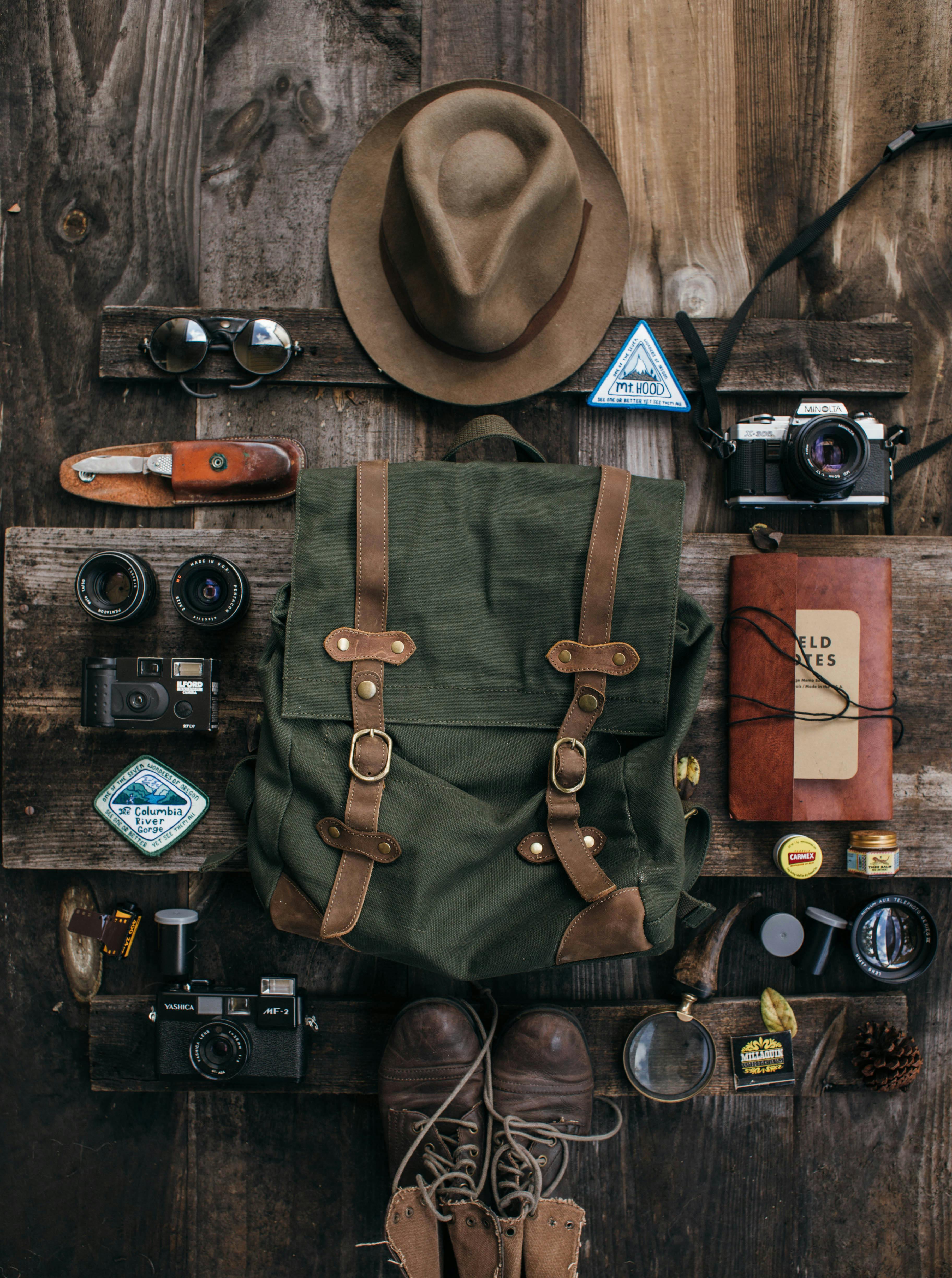
Packing lists have a tendency to grow. Every blog adds a few more items, every gear brand suggests their latest product, and before you know it, you’re carrying 25 pounds for a 6-mile loop.
Here’s what you actually need for a spring or summer day hike in temperate conditions, stripped down to what matters.
The non-negotiables
Water. One liter per two hours of hiking as a starting point. More in heat, at altitude, or on exposed trails. A simple reusable bottle works. You don’t need a hydration bladder for a day hike unless you genuinely prefer it.
Sun protection for your skin. SPF 30 minimum, applied before you start. Bring the tube for reapplication if you’ll be out more than two hours.
Sun protection for your eyes. This is where people cut corners and shouldn’t. UV400-rated sunglasses with decent coverage. Not the beat-up pair from your car’s visor. A proper pair that stays on your face when you look down and doesn’t leave gaps where light floods in from the sides. If you’re above tree line or on reflective surfaces like rock slabs and water crossings, this matters even more.
Navigation. A downloaded trail map on your phone. Screenshots work. AllTrails works. Having your route saved offline is the key part. Cell service is not guaranteed.
A snack. Trail mix, a bar, dried fruit. Anything calorie-dense that won’t melt or crumble. You’ll want it around the halfway point.
A light layer. Even in summer, weather shifts. A packable rain shell or wind layer weighing a few ounces can save a trip. Toss it in the bottom of your pack and forget about it until you need it.
The smart additions
A hat. Baseball cap or wide-brim, depending on sun exposure. A hat plus sunglasses together cover the two most vulnerable areas: your scalp and your eyes.
Blister kit. Two or three adhesive bandages and a small strip of moleskin. Takes up zero space, prevents a minor annoyance from ruining your last two miles.
A fully charged phone. Not for scrolling. For photos, navigation, and emergencies. Airplane mode saves battery if you don’t need real-time anything.
What you can probably skip
Trekking poles for anything under 8 miles on moderate terrain. Unless you have knee issues, they’re extra weight and hassle for a casual day out.
A first aid kit beyond basic blister supplies. For a day hike on established trails within cell range, a full kit is overkill. Know the basics of wilderness first response, and carry your phone.
Camp stove and cookware. It’s a day hike. Eat a sandwich.
Multiple outfit changes. You’re going to sweat. Wear moisture-wicking fabric, accept it, and change when you get home.
The packing test
Everything should fit in a small daypack, 15 to 20 liters maximum. If your pack is full, you’ve brought too much. A day hike should feel light. The goal is to move freely, enjoy the trail, and come home without having carried a bunch of stuff you never touched.
Keep it simple. The trail is the point, not the gear.