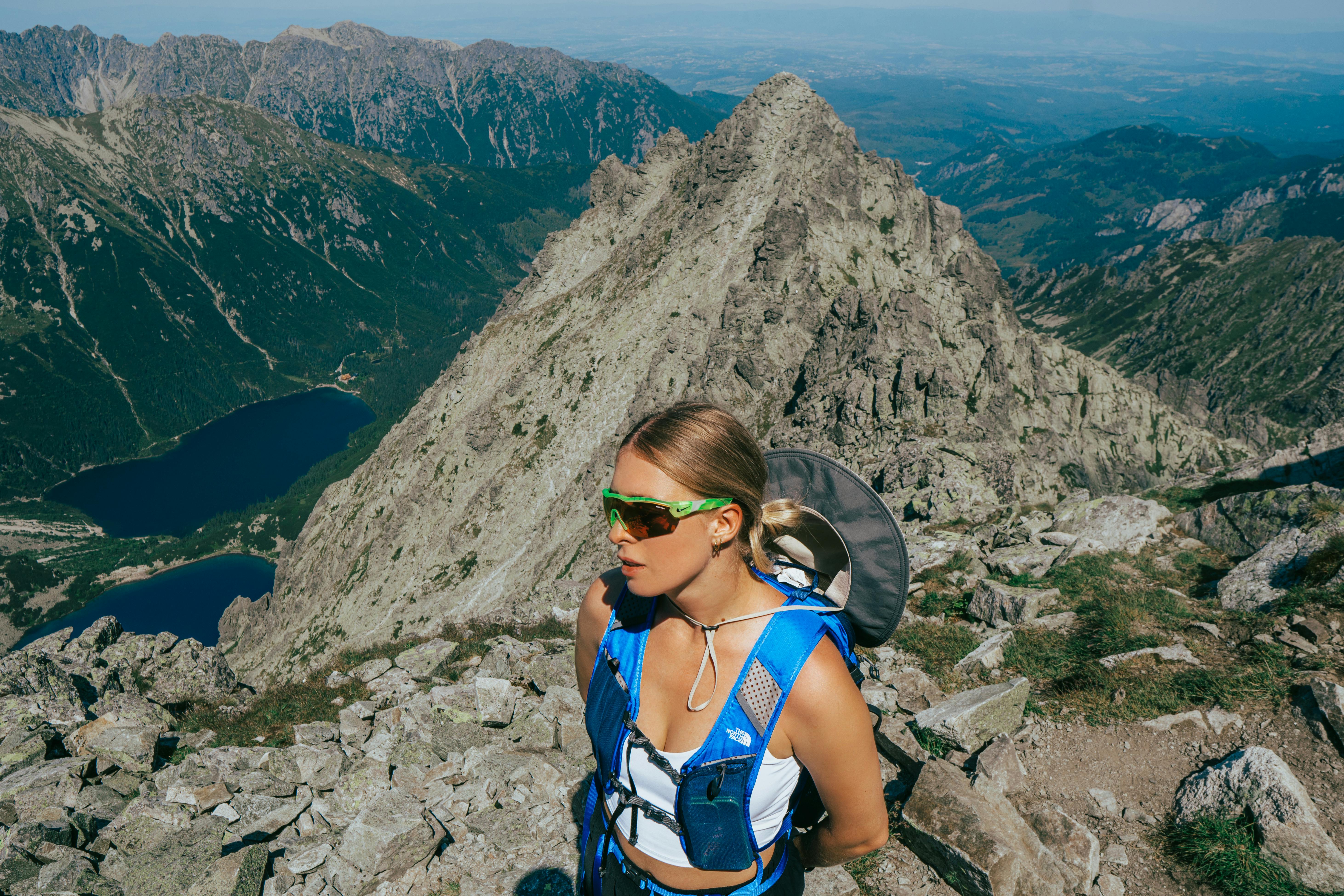
Trail runners face a specific eyewear dilemma. Wraparound sport frames offer maximum coverage but look like you are permanently en route to a triathlon. Standard frames look better but leave gaps where wind, debris, and peripheral light enter.
Neither option is universally correct. The right choice depends on where and how you run.
The case for wraparound
Wraparound frames curve around the sides of your face, creating a seal between the lens and your skin. This design blocks wind, dust, and peripheral UV from entering around the edges.
On exposed trails with high wind, loose dirt, or intense sun, this coverage matters. Wind dries your eyes and causes tearing. Debris kicked up by other runners or your own feet can hit from the side. UV entering peripherally contributes to the same cumulative damage as direct UV.
Wraparound frames also tend to be lighter because they are made from nylon or polycarbonate rather than acetate. Most weigh under 30 grams. For a three-hour trail run, weight on your face adds up.
The grip systems on sport frames are designed for sweat. Rubber nose pads and temple tips that increase friction when wet prevent the frame from sliding down your face during hard efforts. Standard frames lack this feature and tend to migrate downward when you sweat.
The case for standard frames
Standard frames win on versatility and aesthetics. If you run trails but also wear your sunglasses to the cafe afterward, a wraparound sport frame makes you look like you forgot to change. A well-chosen standard frame transitions between running and everything else without looking out of place.
Standard frames also offer a wider range of lens options and colorways. Sport frames tend to come in black, silver, or neon. Standard frames from independent brands like VEIL Collectives and others in the design-forward space offer shapes and colors that express personal style while still providing UV protection.
On sheltered trails through forest, where wind and debris are minimal and the primary concern is UV protection rather than total coverage, standard frames perform well. The coverage gap around the sides matters less when you are running under canopy.
The practical breakdown
Choose wraparound if: You run exposed alpine or desert trails. You run in high wind regularly. Your runs exceed two hours. You prioritize function over aesthetics on trail.
Choose standard if: You run primarily wooded or sheltered trails. Your runs are under two hours. You want frames that transition to non-running life. You care about how you look at the trailhead.
The hybrid option: Some brands now offer frames with removable side shields. You clip them on for exposed running and remove them for everything else. If you can find a pair that fits well with and without the shields, this is the best of both worlds.
Fit matters more than category
A wraparound frame that bounces on your nose at mile two is worse than a standard frame that stays put. And a standard frame that slides down your face every quarter mile is worse than a wraparound that locks in.
Before committing to either style, run in them. Not a jog around the block. An actual trail run with elevation, sweat, and head movement. The frame that stays put and stays comfortable is the right frame, regardless of category.